
Yacht ownership is increasingly being discussed not only as a lifestyle decision, but also as a structured luxury asset strategy. While yachts have traditionally been viewed primarily as emotional purchases, professional charter management models now allow owners to generate income during unused periods and partially offset operational costs.
According to Master Yachting, modern yacht investment models are based on the combination of private ownership, charter revenue and long-term asset preservation (Master Yachting, 2026).
Charter Income as an Operational Strategy
One of the core concepts behind yacht investment is charter utilization during high-demand periods. Instead of leaving the yacht unused for most of the season, owners place the vessel into professionally managed charter programs.
Master Yachting explains that charter revenue generated during peak season can “cover most operating costs and a significant portion of financing expenses” (Master Yachting, 2026).
The exact profitability of a yacht investment depends on several factors:
- vessel type
- charter demand
- cruising region
- operational efficiency
- crew and management structure
- age and condition of the yacht.
Motor yachts in destinations such as Croatia, Greece, the Côte d’Azur and the Caribbean often achieve the highest charter occupancy rates during summer and winter peak seasons.
According to Boat International, charter demand remains particularly strong for modern, professionally managed yachts with contemporary layouts and strong brand recognition (Boat International, 2025).
Asset Value and Depreciation
Unlike many luxury assets, yachts combine operational utility with residual asset value. However, yacht ownership still involves depreciation, maintenance costs and long-term capital planning.
Industry estimates often refer to the “10% rule,” suggesting that annual operational costs may reach approximately 10–15% of the yacht’s total value depending on size, crew structure and usage profile (Yacht Cost Calculator, 2026).
At the same time, newer yacht models from established shipyards tend to maintain stronger resale value due to modern technology, updated layouts and lower maintenance requirements.
Master Yachting notes that investing in “new yacht models with warranty and professional care” may improve long-term value stability compared to older vessels requiring extensive refits (Master Yachting, 2026).
The Role of Professional Charter Management
Professional management plays a crucial role in yacht investment performance.
Charter-management companies typically handle:
- marketing and bookings
- technical maintenance
- crew coordination
- marina logistics
- guest services
- legal and tax compliance.
According to Ocean Independence, professionally managed yachts benefit from higher operational standards and stronger visibility within the global charter market (Ocean Independence, 2026).
Management structures also influence charter utilization rates and operational efficiency. Some programs offer guaranteed income models, while others operate through revenue-sharing structures based on actual charter performance.
Risks and Market Reality
Despite growing interest in yacht investment, industry experts caution that yachts should not be viewed as purely profit-oriented financial products.
Marine Project argues that charter income alone rarely generates full investment profitability once depreciation, operational expenses and reserve costs are considered (Marine Project, 2026).
The publication notes that even highly successful charter yachts often operate primarily as “lifestyle assets with partial cost recovery” rather than fully profit-maximizing investments.
For many owners, however, the value proposition extends beyond direct financial return. Yacht ownership combines:
- private use
- global mobility
- luxury hospitality
- asset diversification
- charter income potential
within a single tangible asset.
Market Trends and Future Outlook
As demand for experiential luxury continues to grow, charter markets are expanding globally. New generations of yacht owners increasingly seek flexible ownership structures that combine personal enjoyment with professional asset management.
Master Yachting describes this trend as a shift toward “ownership instead of timesharing,” where owners maintain full legal control of the yacht while still benefiting from charter operations (Master Yachting, 2026).
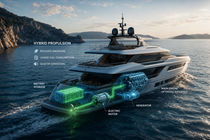
At the same time, sustainability and operational efficiency are becoming increasingly important for preserving long-term asset value. Hybrid propulsion systems, lower fuel consumption and environmentally conscious yacht designs are expected to influence both resale performance and charter attractiveness in the coming years.
Conclusion
Successful yacht investment strategies require realistic expectations and professional planning. Charter income can significantly reduce ownership costs, but long-term performance depends on vessel selection, management quality, operational efficiency and market positioning.
For many investors, the modern yacht is no longer viewed solely as a symbol of luxury, but increasingly as a managed lifestyle asset combining personal enjoyment, global mobility and strategic financial structuring.
References
Boat International. (2025). Global Yacht Charter Market Insights. Available at: https://www.boatinternational.com/ (Accessed: 12 May 2026).
Marine Project. (2026). Is Owning a Yacht for Charter Profitable?. Available at: https://marine-project.com/yacht-investment/ (Accessed: 12 May 2026).
Master Yachting. (2026). Yachtinvest: Invest & Secure Returns. Available at: https://masteryachting.com/en/yachtinvest/ (Accessed: 12 May 2026).
Ocean Independence. (2026). Yacht Charter and Management Services. Available at: https://www.oceanindependence.com/ (Accessed: 12 May 2026).
Yacht Cost Calculator. (2026). Professional Yacht Ownership Expense Analysis. Available at: https://yachtcostcalculator.com/ (Accessed: 12 May 2026).